
Meet Harvey: The power of being understood
Harvey has cerebral palsy and profound and multiple learning disabilities (PMLD). He communicates without using speech, uses a wheelchair, and requires support with all aspects of daily life.
Before moving to Vallance Gardens, Harvey lived in another home where his self-injurious behaviour was often described as “challenging.” He was prescribed diazepam when needed, but it was being administered daily. Although Harvey was able to eat orally, he was mainly being fed through his Percutaneous Endoscopic Gastrostomy (PEG) tube.
When Harvey moved to Vallance Gardens, the team worked closely with his family to build a detailed understanding of who he is, how he communicates, and what matters most to him. Through listening carefully to Harvey’s parents and learning to recognise his communication, the team discovered that what had previously been viewed as “challenging behaviour” was often Harvey’s way of expressing discomfort or pain. By recognising the subtle signs that Harvey shows before becoming distressed and responding quickly, the team has been able to support him in a way that keeps him comfortable, safe and understood.
First Steps
Before Harvey moved in, the team focused on getting to know him as a person, not just understanding his support needs.
Harvey’s mum stayed at Vallance Gardens for a week after the move, with a room prepared for her so she could get to know the team and see first-hand how Harvey would be supported. At the same time, she helped the team learn more about Harvey, his routines and the approaches that worked best for him.
Before the move, team members spent two weeks visiting Harvey at his previous home. These visits helped them build a relationship with Harvey, understand how he communicated and identify the support approaches that helped him feel comfortable.
By the time Harvey arrived at Vallance Gardens, a strong foundation of trust had already been built with both Harvey and his family.
Ongoing Support
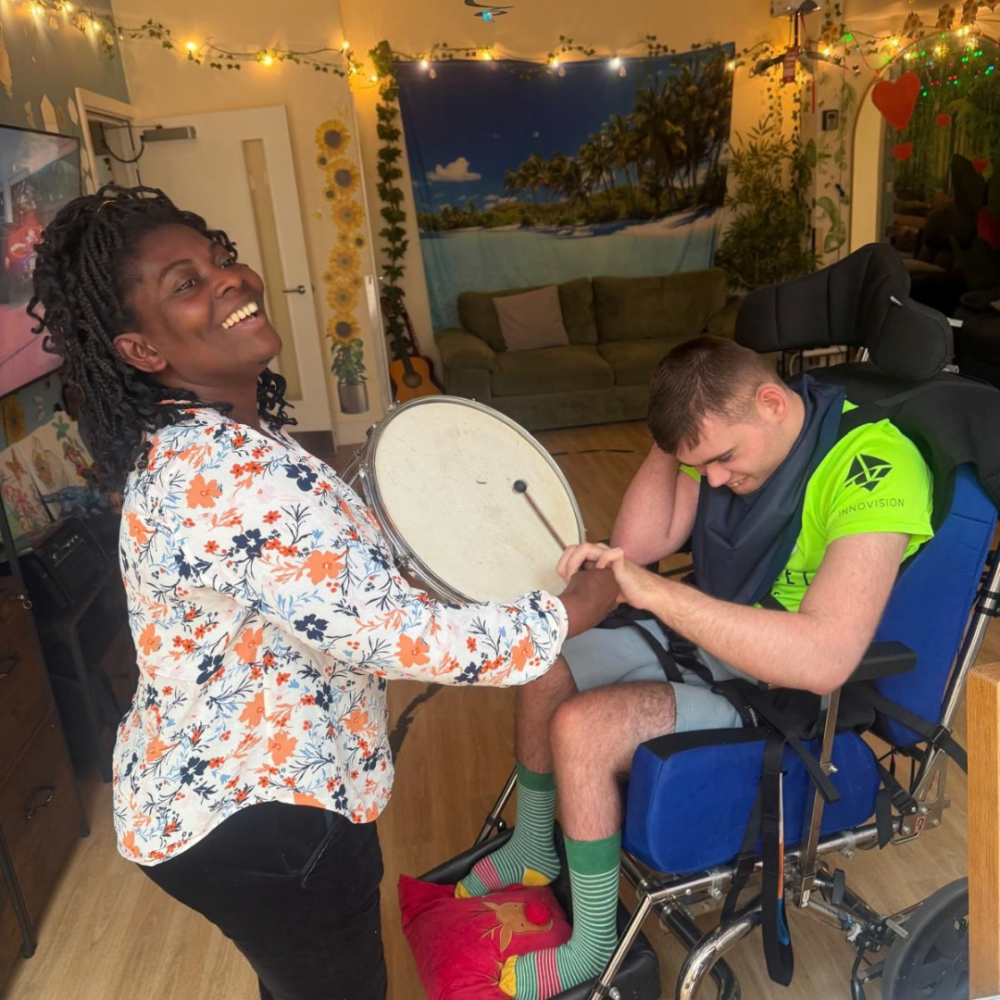
Harvey communicates through eye contact, facial expressions, body language, touch and vocal sounds. Team members are trained to recognise the unique ways he expresses his needs and preferences. For example, facial twitching or scratching his face can indicate bowel discomfort, forceful arm movements paired with vocalising usually mean his pad needs changing, and a tense, rigid body means he’s uncomfortable.
The smallest details can make a big difference to Harvey’s comfort and wellbeing. He is supported to eat from his right side, enjoys his meals with food separated on his plate and is encouraged to make choices throughout the day. Team members present two options at a time, for example for meals, clothing and activities, then observe Harvey’s responses to understand his preferences.
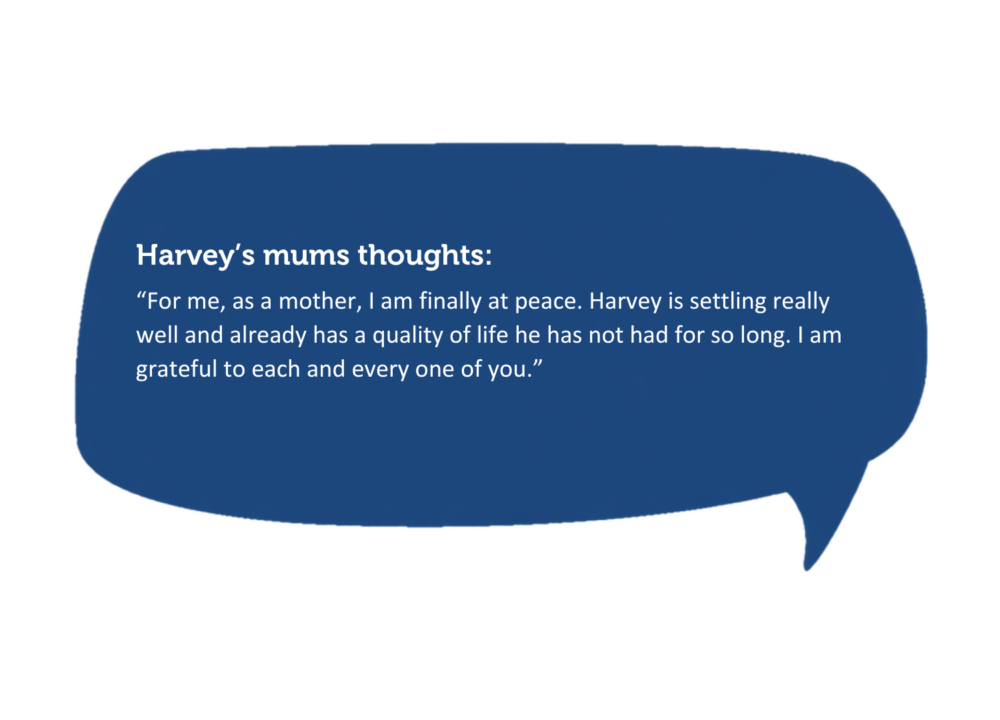
Communication with Harvey’s family remains a vital part of his support. The team shares regular updates and monthly newsletters, helping his parents stay connected to the experiences and achievements that matter to him.
Many of the techniques that help Harvey feel calm and comfortable, including listening to classical music, using sensory lights and gentle repositioning, were shared by his mum and are now second nature to the team. Her knowledge continues to shape the support Harvey receives every day.
Harvey’s Progress
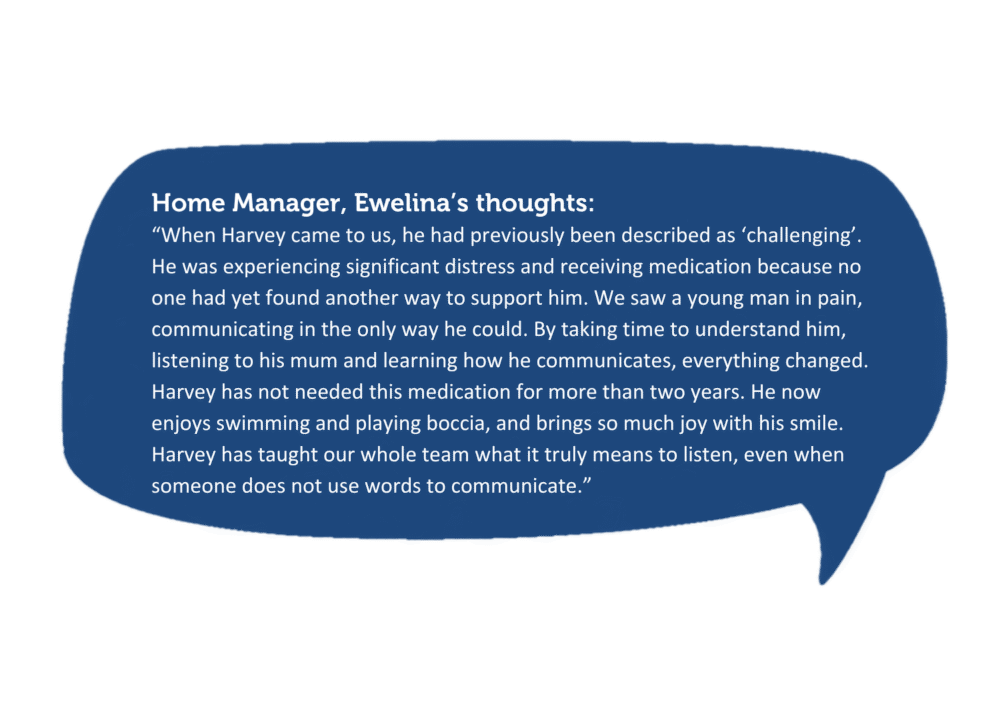
Since moving to Vallance Gardens, Harvey has not needed diazepam and the medication was successfully discontinued four months after he moved in.
Self-injurious behaviour – once a daily occurrence – has reduced dramatically and now happens very rarely. Harvey is eating well, has gained weight and is enjoying a healthier and more active lifestyle.
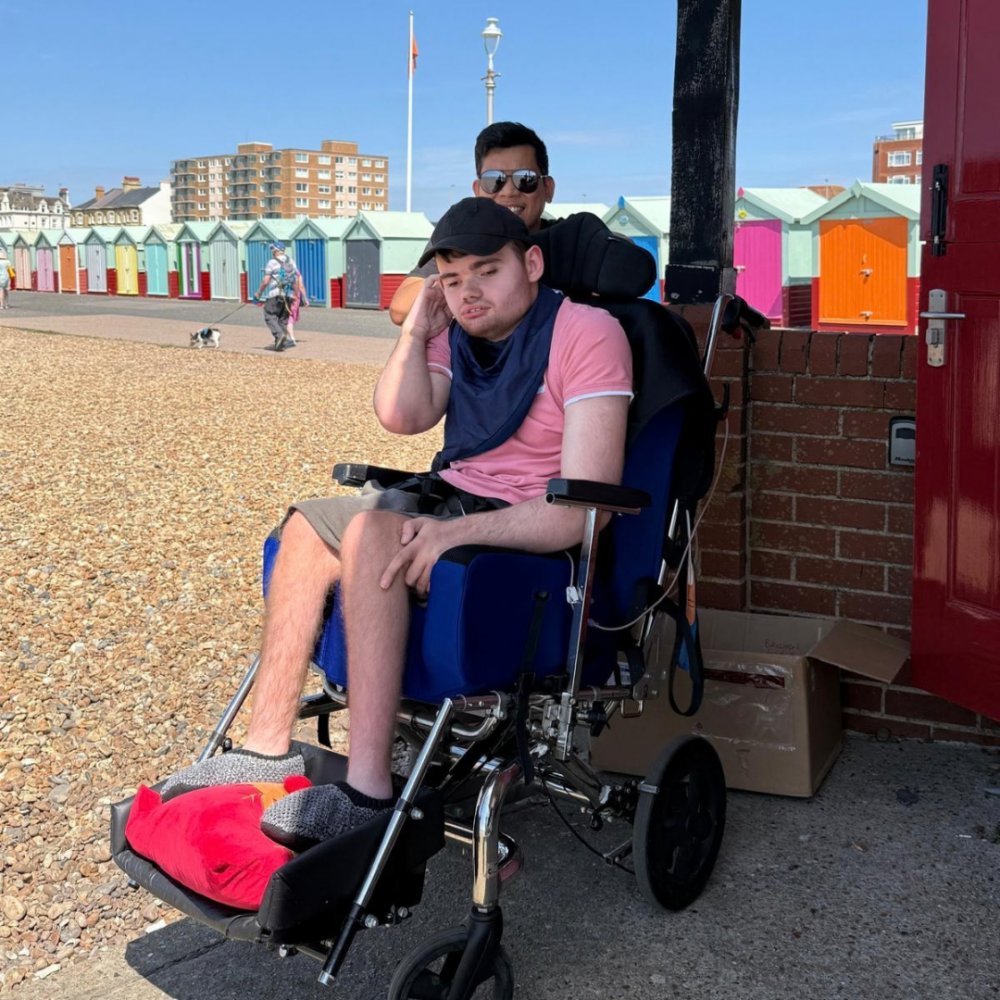
Harvey attends swimming sessions and Boccia every Tuesday at King Alfred Leisure Centre. He is an active member of his local community and enjoys spending time with the people around him.
Today, Harvey is known for his warm personality and sociable nature. Team members describe him as relaxed, smiling and engaged, enjoying being with others and taking part in the world around him.
Looking to the Future
In the world of PMLD, success is not always measured by reaching new milestones. Sometimes, it is about ensuring a person experiences comfort, connection and meaningful participation in everyday life.
For Harvey, that means continuing to enjoy the activities he loves while exploring new opportunities to increase his independence. He is currently working towards using switches again, to allow him greater control over his environment and daily experiences.
Harvey continues to enjoy swimming, hydrotherapy, sound baths and music therapy. The team is always looking for new sensory experiences and activities that will enrich his life and help him continue doing the things that bring him joy.
Need help finding the right support? We're here for you.